Reliable LED Signaling and Signage Solutions Ready Anytime
A warning light that fails at the wrong moment can create confusion in seconds. A sign that goes dark during a service outage, traffic event, or equipment fault can leave people guessing when they need clear direction most.
That is why LED signaling and signage cannot be treated as a finishing touch. These systems guide movement, mark hazards, confirm machine status, support emergency response, and keep public spaces easier to understand. When they work well, people notice the message, act quickly, and keep moving. When they do not, small delays can turn into safety risks, lost time, and avoidable stress.
Reliable LED signaling and signage solutions ready anytime means more than bright lights on a panel. It means the right display, the right enclosure, the right power system, and the right message design working together under real conditions.
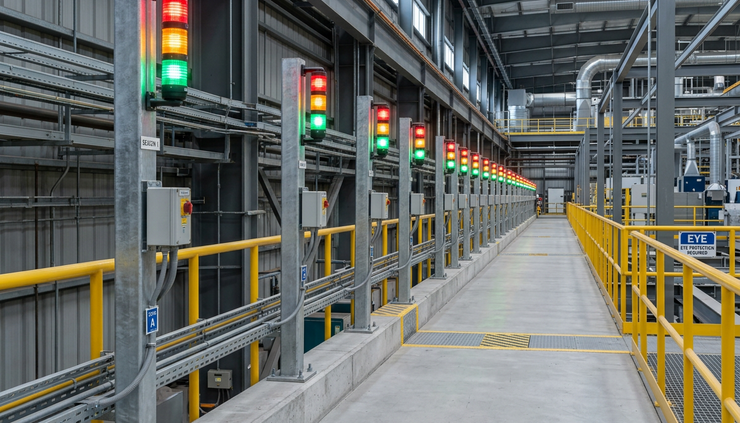
LED signals have to work when attention is limited
The best signal is the one people understand without stopping to think. In a plant, a flashing amber beacon may tell a technician that a machine needs attention. On a loading dock, a red and green dock light may guide a driver. In a parking area, an illuminated arrow may reduce hesitation. In a hospital corridor, a room status sign may support fast decisions.
These moments are often noisy, busy, or stressful. People may be wearing hearing protection. They may be moving equipment. They may be standing outside in rain, heat, or glare. The signal has to cut through those conditions without adding confusion.
LEDs fit this purpose because they can provide clear color, fast response, and strong visibility with lower energy use than older lighting methods. They also work well in many formats, including:
Stack lights and tower lights
Beacon lights
Message boards
Directional arrow signs
Exit and wayfinding signs
Machine status indicators
Traffic and dock control lights
Safety and hazard markers
Outdoor illuminated signage
A good LED signal does not need to be complex. It needs to be unmistakable. Color, brightness, flash pattern, viewing angle, and placement all matter.
For example, a steady green light might communicate safe operation, while a flashing red light may call for immediate action. If both lights look weak in full sun, or if they face the wrong direction, the message fails before anyone has a chance to respond.
Reliability starts with the environment
Many LED signs and signals are installed in places that are hard on equipment. Outdoor units face rain, snow, dust, UV exposure, wind, and temperature swings. Industrial units may deal with vibration, washdowns, chemicals, impact, and airborne particles. Transportation and public safety settings can add long run times and constant visibility demands.
A signal that works indoors on a test bench may not be ready for a loading yard, a food processing area, or a roadside installation. The enclosure and mounting system matter as much as the light source.
Key environmental questions include:
Will the unit be installed indoors, outdoors, or in a covered area?
Does it need protection from dust, spray, washdown, or temporary water exposure?
Will it face direct sunlight?
Will it be exposed to vibration or frequent impacts?
Does the area involve corrosive materials, oils, or cleaning agents?
How hot or cold can the location become?
Will the sign need to remain visible through fog, rain, or bright glare?
Ingress protection ratings, NEMA enclosure types, and material choices can help match a product to the setting. Aluminum housings, polycarbonate lenses, sealed gaskets, stainless hardware, and coated circuit boards can all play a role in long-term performance.
The goal is simple: choose a system that fits the real location, not the ideal location.
Brightness is only one part of visibility
A brighter LED is not always a better LED signal. Too little light can make a warning easy to miss. Too much light can cause glare, eye fatigue, or reduced readability at night. The right brightness depends on distance, surrounding light, message type, and the speed at which people need to react.
Visibility also depends on contrast. A sign with strong contrast between text and background is easier to read. A beacon with a clear lens and defined color is easier to identify. A directional arrow with simple geometry is easier to follow from a moving vehicle.
Viewing angle is another frequent issue. A signal seen from one approach may disappear from another. In long aisles, wide yards, or multi-lane access points, the display must support the angles people actually use.
For text-based LED signs, readability comes down to a few practical choices:
Factor | What helps |
Character height | Larger letters for longer viewing distances |
Font style | Simple, clean characters without decorative shapes |
Message length | Short wording that can be read in one glance |
Contrast | Clear difference between lit and unlit areas |
Refresh behavior | Stable display without distracting flicker |
Placement | Mounted where the eye naturally looks |
A sign that says `STOP` with clear red letters has more value than a crowded display full of instructions. If more detail is needed, use a second sign or a staged message instead of forcing too much into one panel.
For safety signals, consistency is just as important. If red means danger in one area and machine stop in another, the system should not use red for a routine notice nearby. Good signaling uses a shared visual language.

Ready anytime means power and control are planned early
LED signage often gets attention for the visible face, but the hidden parts decide whether it stays ready. Power supply, wiring, surge protection, controllers, sensors, backup power, and network connections all deserve planning before installation.
A small indicator light may only need a simple hardwired input. A larger sign may need a controller, scheduled messages, sensor triggers, or remote status checks. Traffic access signs may need to connect with gates, loop detectors, or building systems. Machine status displays may need signals from PLCs or safety circuits.
A reliable setup starts with a clear answer to three questions.
What triggers the signal?
A manual switch, sensor, machine output, timer, access control system, or emergency system may activate the display. Each trigger should be tested under normal and fault conditions.
What should happen if power fails?
Some signs can safely turn off. Others need battery backup, a generator-supported circuit, or a fail-safe state. Emergency and code-related signs may have specific requirements that should be reviewed with qualified professionals.
Who needs to know when something fails?
A dark sign is not always obvious from the control room or maintenance shop. Some systems can report faults, power loss, communication loss, or LED module issues. Even a simple inspection routine can help catch problems before they matter.
Surge protection is also easy to overlook. Outdoor signs, long cable runs, and facilities with heavy equipment can suffer from voltage spikes. Proper grounding and protection help reduce the chance of early failures.
The right solution depends on the message
LED signaling covers a wide range of uses. The right choice depends on what the system must communicate, how fast people must respond, and how much information they need.
For immediate warnings, simple signals work best. A beacon, tower light, or flashing border can draw attention quickly. For directional guidance, arrows and lane control indicators reduce uncertainty. For changing information, a programmable LED display supports different messages without replacing the sign face.
Here is a practical way to think about common needs:
Need | LED solution that often fits |
Show machine status | Stack light or panel indicator |
Warn about a hazard | Flashing beacon or high-visibility warning sign |
Guide vehicles | Red and green traffic light, arrow board, or lane sign |
Share changing instructions | Programmable LED message display |
Mark exits and paths | Illuminated wayfinding or exit signage |
Support loading dock safety | Dock light with clear driver and worker signals |
Identify restricted areas | Illuminated notice sign with simple wording |
Color selection should follow local practice, internal standards, and any relevant safety rules. Red, amber, green, blue, and white often carry different meanings based on the setting. Do not rely on color alone when the message is critical. Shape, text, flash pattern, or position can help support people with color vision differences and improve recognition at distance.
Sound can also support visual signals, but it should be used with care. Audible alerts can help in areas where people may not face the sign, but too many alarms can lead to alarm fatigue. The visual system should still carry the message clearly.
Durable design reduces maintenance surprises
LEDs are known for long service life, but the full sign or signal is more than the LED chips. Drivers, seals, lenses, fasteners, connectors, and control boards all affect how long the system performs.
A dependable product should make maintenance practical. That may mean modular LED boards, accessible wiring compartments, replaceable lenses, clear labeling, and mounting hardware that can be serviced without taking apart nearby equipment.
Good maintenance planning includes:
Keeping the lens or sign face clean
Checking seals and gaskets during routine inspections
Looking for water inside enclosures
Tightening loose mounts after vibration or weather events
Testing backup power where used
Confirming that sensors and controllers trigger the correct message
Replacing faded labels or damaged covers
For outdoor installations, physical position matters. A sign placed where trucks can clip it, snowplows can hit it, or forklifts can strike it will fail sooner. Protective bollards, raised mounting, and clear sightlines are part of reliable design.
Documentation also helps. Keep wiring diagrams, controller settings, replacement part details, and inspection records where maintenance teams can find them. A system that is easy to understand is easier to keep ready.
Standard products and custom builds both have a place
Some LED signaling needs are straightforward. A standard beacon, tower light, or exit sign may be the right answer. Standard products can reduce lead time, simplify replacement, and make training easier.
Other situations need a tailored solution. A custom LED sign may fit a specific enclosure size, message layout, input voltage, mounting pattern, or control method. A facility may need special colors, high-visibility symbols, multiple languages, or integration with existing equipment.
The choice is not about choosing the most advanced option. It is about matching the solution to the job.
Standard products often work well when:
The message is common and simple
The environment is typical for the product category
Replacement speed matters
The same unit will be used in several locations
Custom or semi-custom systems make sense when:
The sign must fit a unique space
The message changes by process or site condition
Existing controls require specific inputs or outputs
Visibility distance or viewing angle is unusual
The enclosure needs special protection
A ready-anytime system may use both. For example, a facility might use standard tower lights for machines, standard dock lights for loading bays, and a custom LED message display for yard coordination.
How to specify LED signage with fewer mistakes
The best way to avoid rework is to define the use case before choosing the product. A short written specification can save time during purchasing, installation, and maintenance.
A clear specification should cover the following:
Message and action
Write the message and the action it should trigger. For example, “Amber flashing light means wait for operator clearance.”
Viewing distance
Estimate how far away people or drivers will be when they need to understand the signal.
Viewing direction
List the main approach angles, including side views if needed.
Ambient light
Note whether the sign will face direct sun, night operation, glare, shadows, or low-light spaces.
Mounting location
Define pole, wall, machine, ceiling, gate, rail, or cabinet mounting. Include vibration or impact concerns.
Power and control
Confirm voltage, control input, wiring route, and backup needs.
Environment
Include indoor or outdoor use, temperature range, dust, water, chemicals, and washdown exposure.
Service plan
Decide who inspects it, how often, and what spare parts should be stocked.
This level of detail does not slow down the project. It helps the right product get chosen the first time.
LED signage is most effective when it feels obvious
A well-designed LED signal rarely calls attention to itself as hardware. People simply understand what to do. The truck stops. The operator checks the machine. The visitor follows the arrow. The maintenance team responds to the right area.
That kind of clarity comes from practical choices: visible placement, simple messages, suitable brightness, durable housings, dependable power, and products matched to the environment.
Ready anytime is not a slogan. It is a standard for how signaling systems should behave when conditions are busy, loud, wet, dark, hot, cold, or unpredictable. The right LED solution helps reduce hesitation and keeps people informed at the exact moment clear information matters most.
Choose LED signaling and signage by starting with the message, then build outward to the environment, controls, power, and maintenance plan. When every part supports the same goal, the result is simple: clear signals that are ready whenever they are needed.